
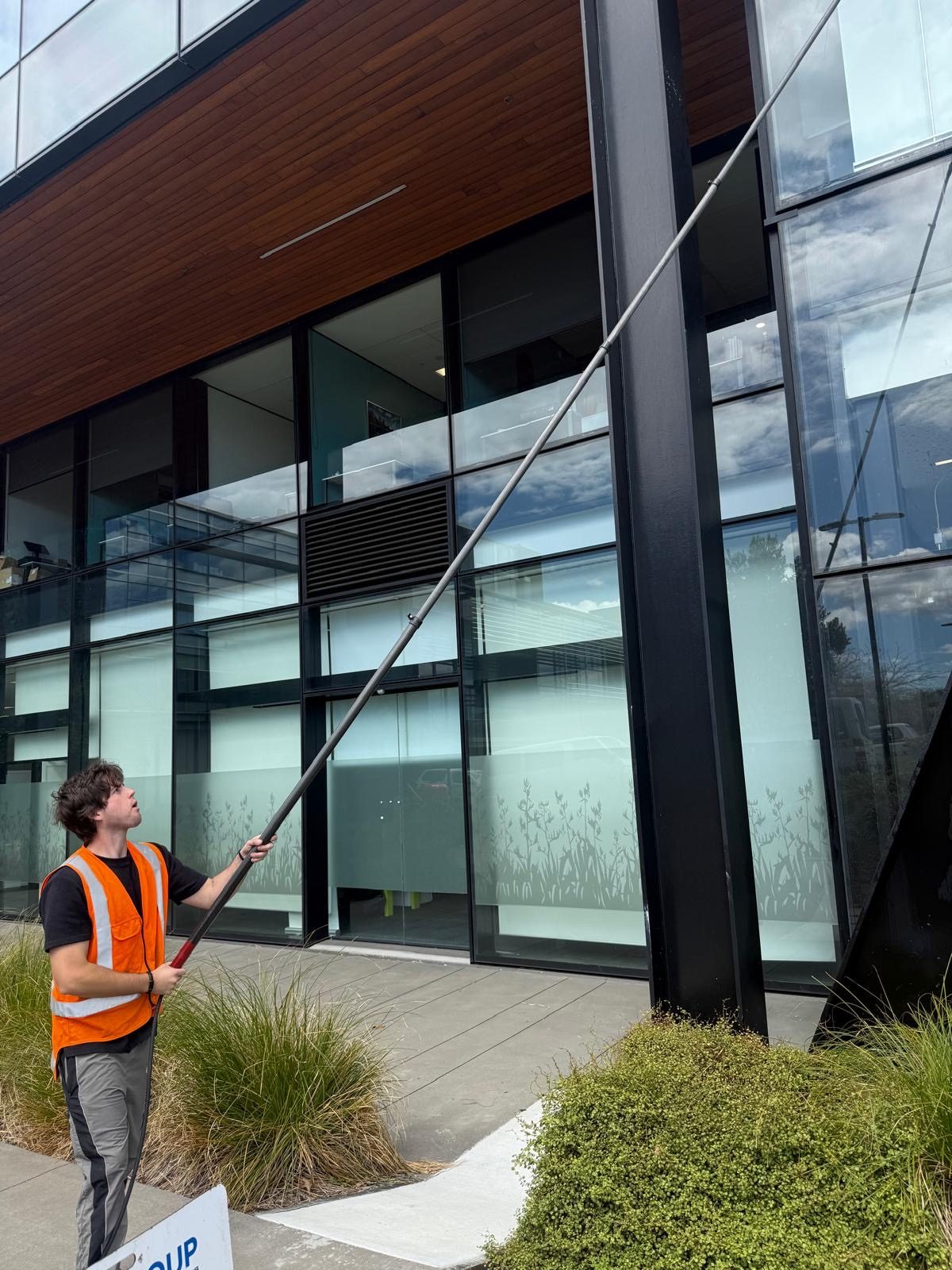
When it comes to building washing in Auckland, there’s a common idea that the harder you blast a building, the cleaner it gets. Crank the water blaster up, put on the narrowest nozzle and watch the grime fly. It looks impressive, but on a lot of buildings it’s the fastest way to strip paint, mark cladding or push water somewhere it shouldn’t be.
Here’s how we actually go about a building wash at Clean Start, and why we often reach for the gentler option first.
Look before you spray: assessing the building first
Before anything gets wet, we have a proper look at what we’re washing. Every building is different, so a good exterior clean starts with a few questions:
- What’s the surface or coating?
- Is anything loose, damaged or poorly sealed?
- Where are the windows, vents, penetrations and anything sensitive, like lights, outlets or plant?
- Where is the water going to end up?
If there’s any doubt about how a surface will react, we test a small out-of-the-way patch first. It takes a few minutes and saves a lot of awkward conversations.
Use the gentlest building washing method that does the job
Our rule is simple: use the least aggressive method that will get the result without damaging the surface. Depending on the building, that might be one of the following.
Hose and broom
A soft brush, a suitable diluted cleaner, time to let it work, then a thorough rinse at hose pressure. Old school, but very effective on a lot of surfaces.
Soft washing
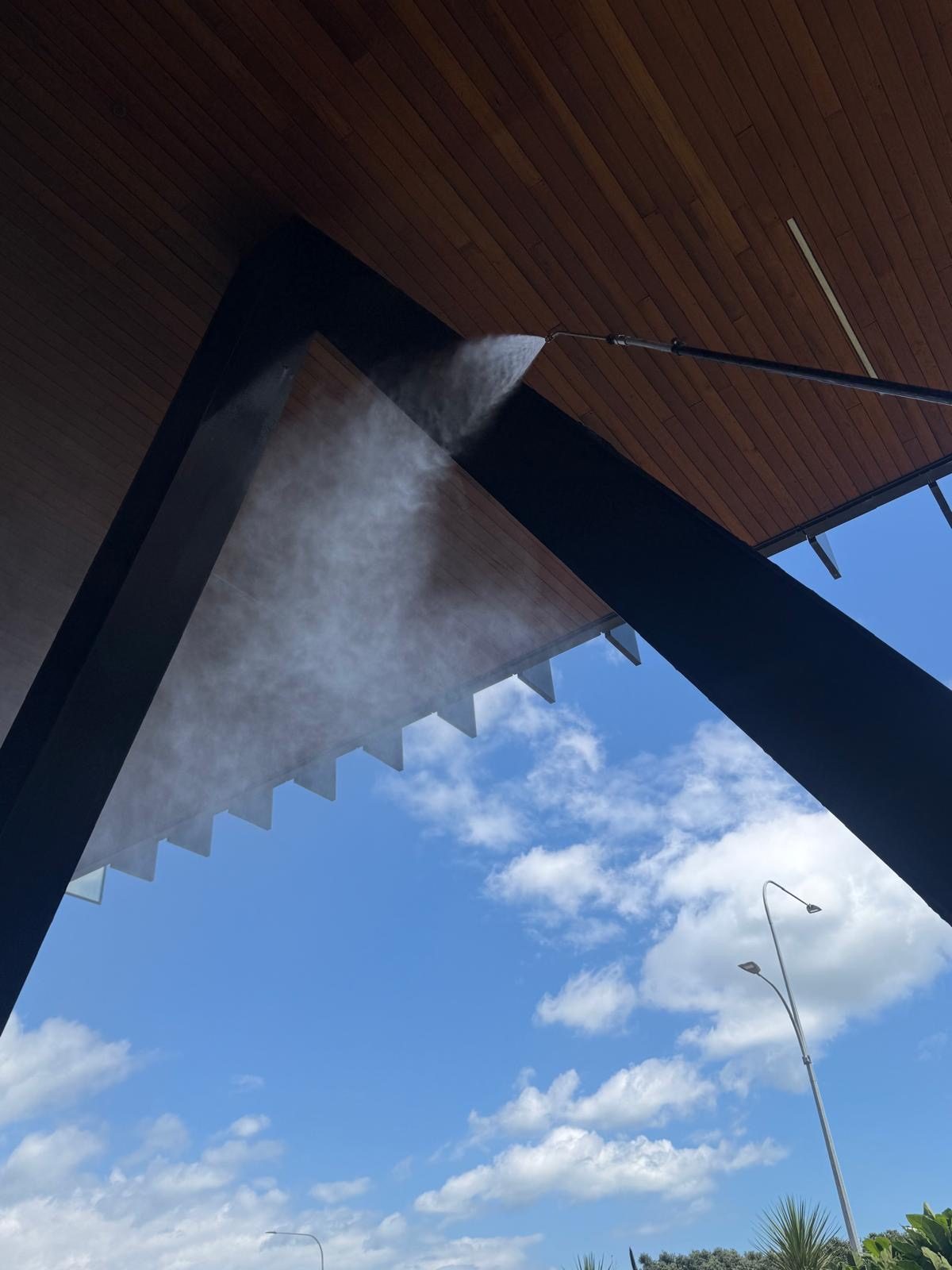
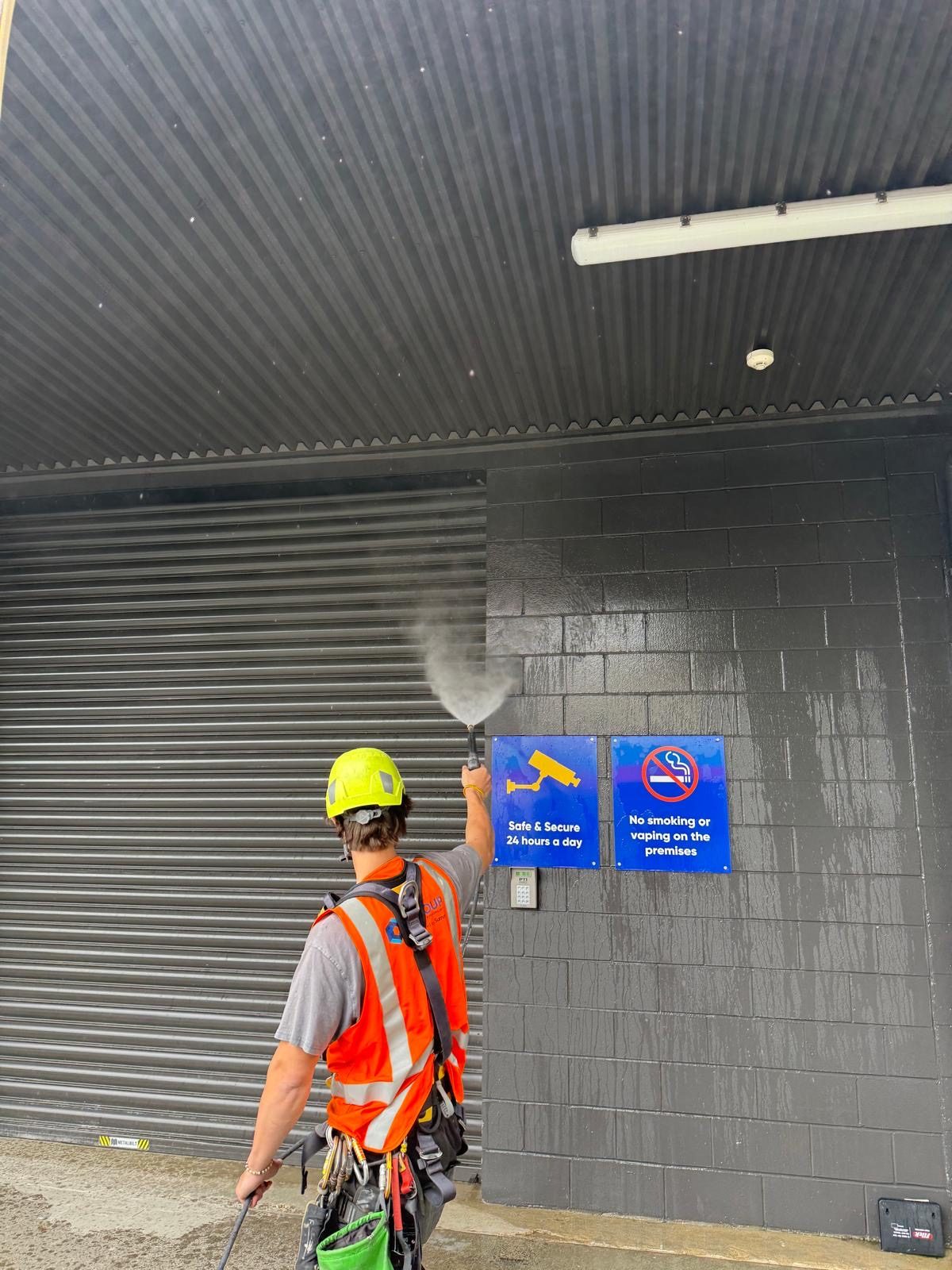
With soft washing, the cleaning solution does the heavy lifting and the water is at lower pressure. We only use it where the surface, coating and product all suit it.
Treatment cleaning
A product goes on at low pressure and the weather does the rest over the following weeks.
Pressure washing (water blasting)
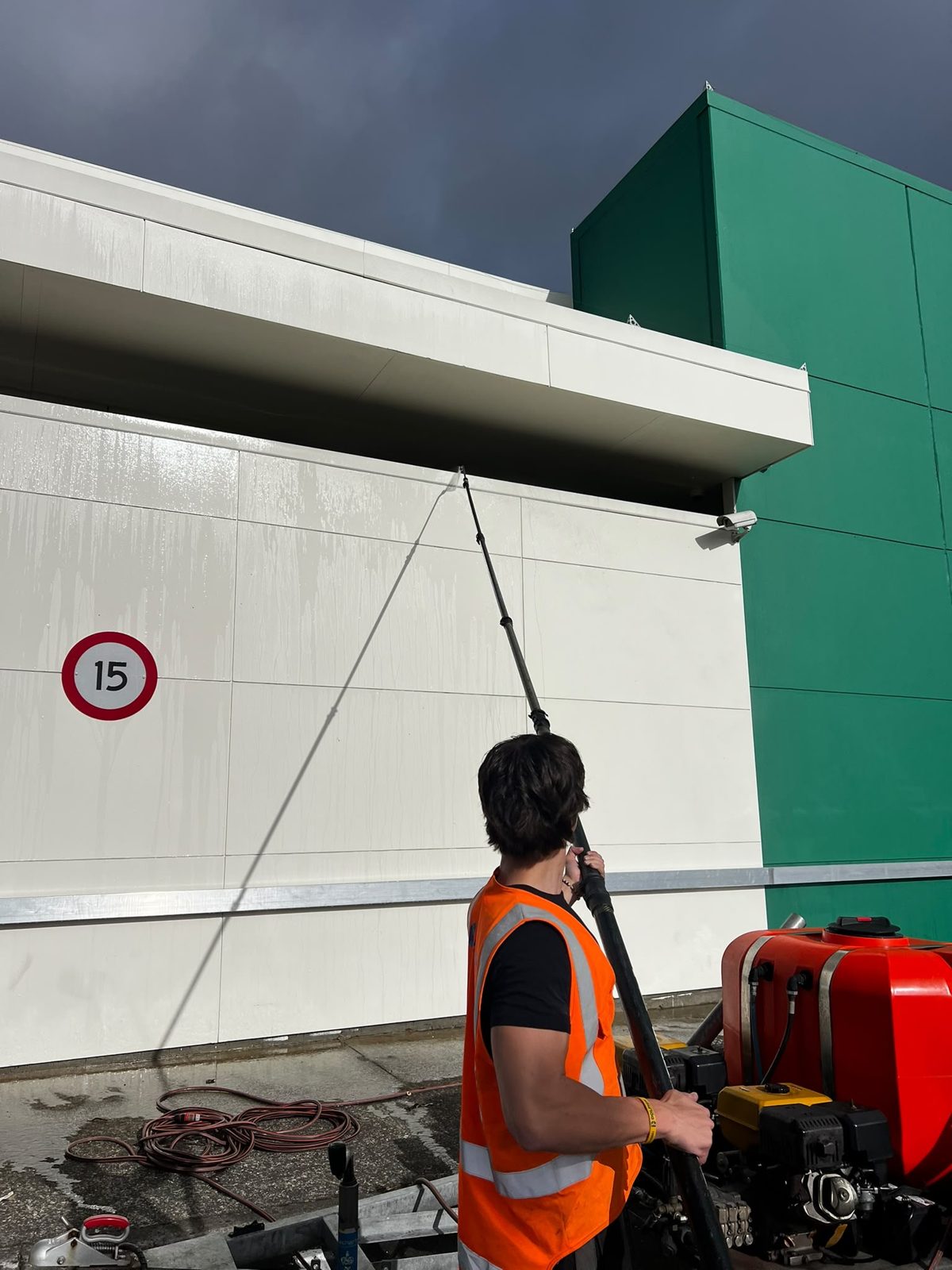
Water blasting is still a useful tool. We just choose the pressure, nozzle, distance and angle for the surface in front of us, rather than turning it up to max.
Where water blasting goes wrong
Whether it’s a commercial building wash or a smaller exterior cleaning job, a few things we simply don’t do:
- No high-pressure water into joints, seals, flashings or openings. Water getting into the building is one of the biggest risks of any wash.
- No pressure washing windows or glass doors, and no narrow or turbo nozzles on anything delicate.
- No routine pressure washing of roofs or soft timber like cedar and pine.
- No high-pressure water on anything that might contain asbestos. On older buildings, we find out first. WorkSafe has more on asbestos and how to manage it.
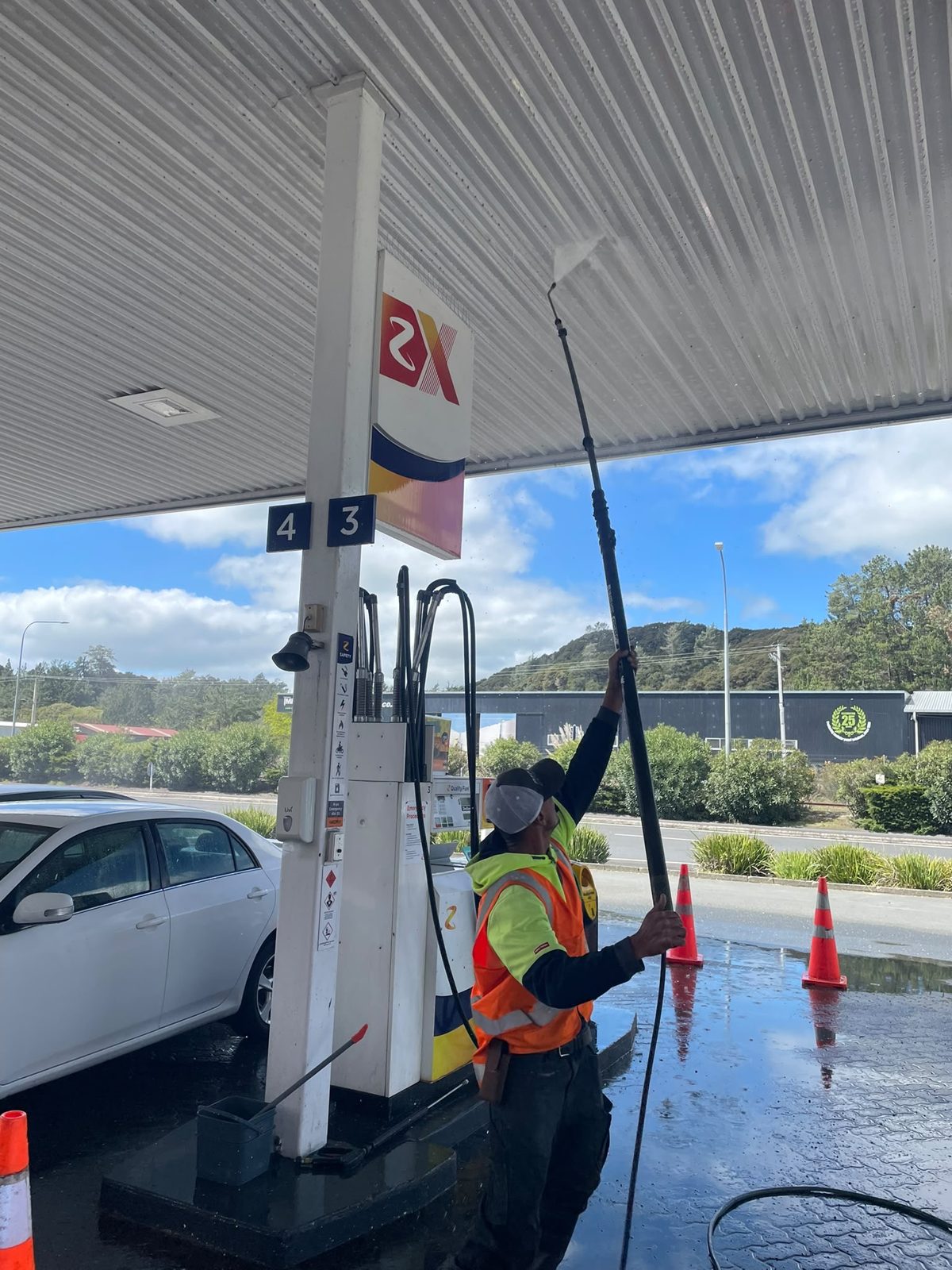
The same thinking applies whether we’re washing a multi-storey building or giving advice on house washing: the surface decides the method, not the machine.
The water has to go somewhere
Wash water picks up everything that comes off the building: dirt, algae, moss, paint flakes and cleaning product. “Biodegradable” doesn’t mean it’s fine to send down the stormwater drain. In Auckland, stormwater drains lead to our streams and the sea, and Auckland Council explains why detergents and grime should be kept out of them.
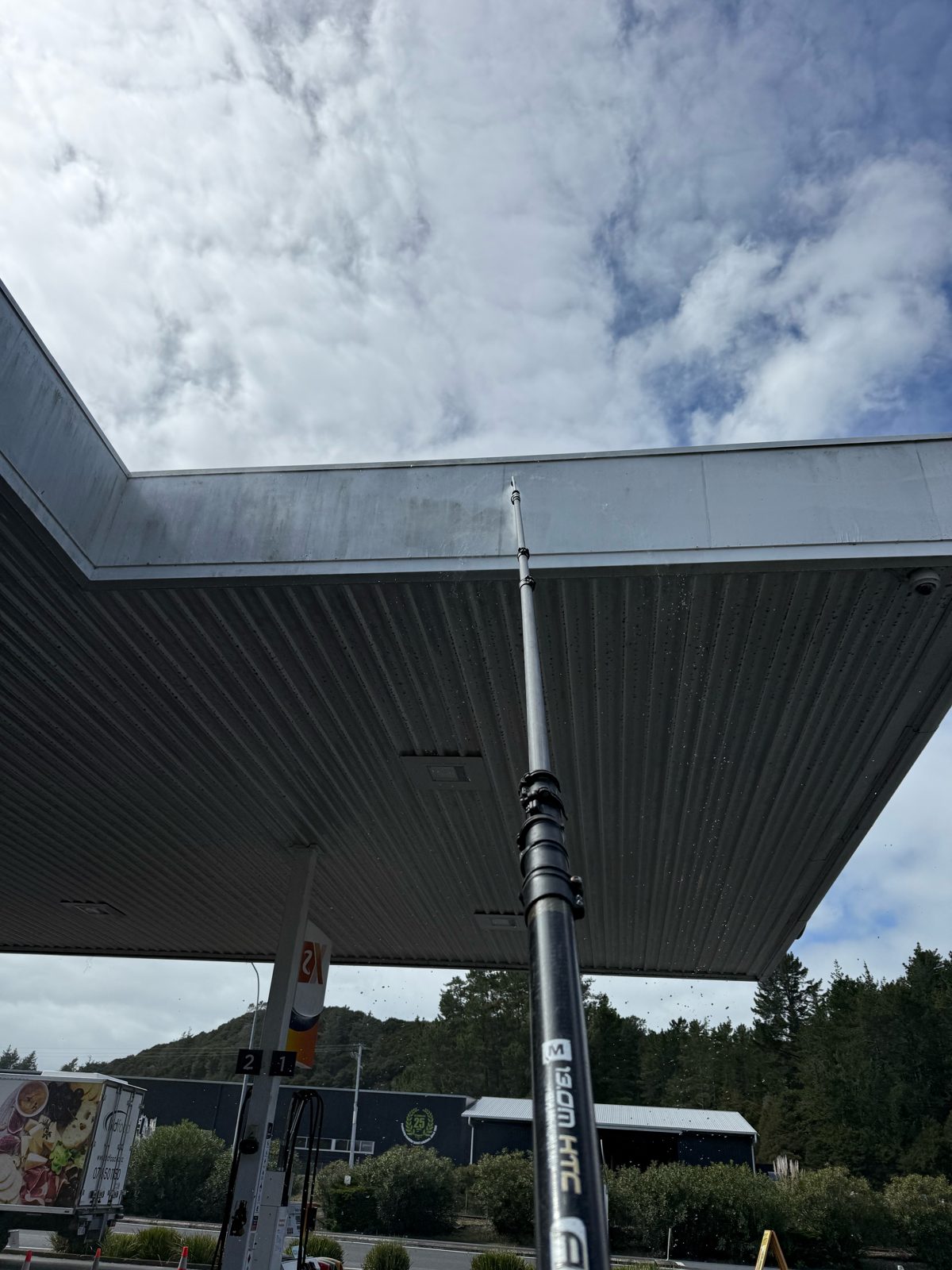
So before we start, we:
- Find the drains, downpipes and any rainwater tanks.
- Plan how to contain, divert or recover the water.
- Set up the right gear for the site. That can mean drain mats, bungs, sand socks, pumps or wet vacs.
- Keep checking it all while we work.
That last step is the important one. A drain mat that’s been put down and forgotten isn’t doing much.
Being straight about the result
Not every stain comes out, and not every treatment looks finished on the day. Treatment cleans are designed to work over time, so we won’t promise a freshly washed look straight away when that’s not how the product works.
If we find existing damage, like a tired window seal or flaking paint, we note it and work around it carefully rather than blasting through it.
Our completion notes keep it simple:
- what we did
- what we found
- anything we’d recommend.
If something couldn’t be fully removed without risking the surface, we say so.
The short version
Good building washing isn’t about how much force you can throw at a building. It’s about knowing the surface, picking the right method, looking after the water, and being honest about what’s realistic. That’s what keeps buildings looking good for longer.
Building washing FAQs
Is soft washing better than water blasting?
It depends on the surface. Soft washing lets the cleaning solution do the work at lower pressure, so it’s often kinder to coatings. But we only use it where the surface, coating and product all suit it. Water blasting is still useful when the pressure, nozzle, distance and angle are set for the surface.
Can water blasting damage my building?
It can. Too much pressure can strip paint, mark cladding or force water into joints, seals, flashings and openings. That’s why we use the gentlest method that gets the result, and test a small patch first if we’re unsure.
Where does the wash water go?
Not down the stormwater drain. Before we start we find the drains, downpipes and any rainwater tanks, then contain, divert or recover the water using things like drain mats, bungs, sand socks, pumps or wet vacs, and we keep checking them as we go.
Will my building look perfect straight after a wash?
Often it’ll look much better, but not every stain comes out, and treatment cleans work over the following weeks rather than on the day. We’ll tell you what to expect up front, and our completion notes cover anything that couldn’t be fully removed without risking the surface.
Do you wash roofs or cedar cladding with a water blaster?
Not routinely. Roofs and soft timber like cedar and pine usually need a gentler approach, such as hose and broom or a treatment clean.
Get a building washing quote
Need building washing in Auckland done carefully and properly? Talk to the Clean Start team about your building. We’ll take a look, recommend the right method and give you a clear quote. Get in touch for a free quote or find out more about our building washing service.


