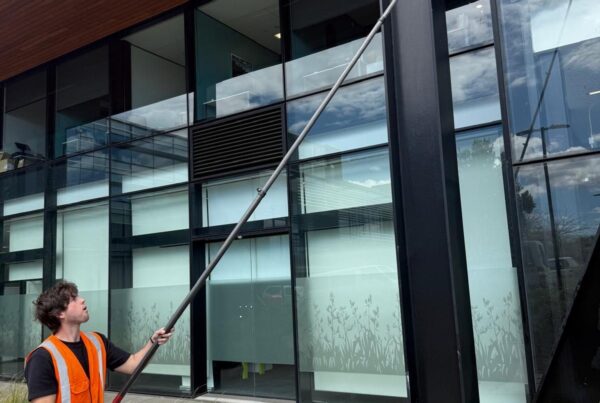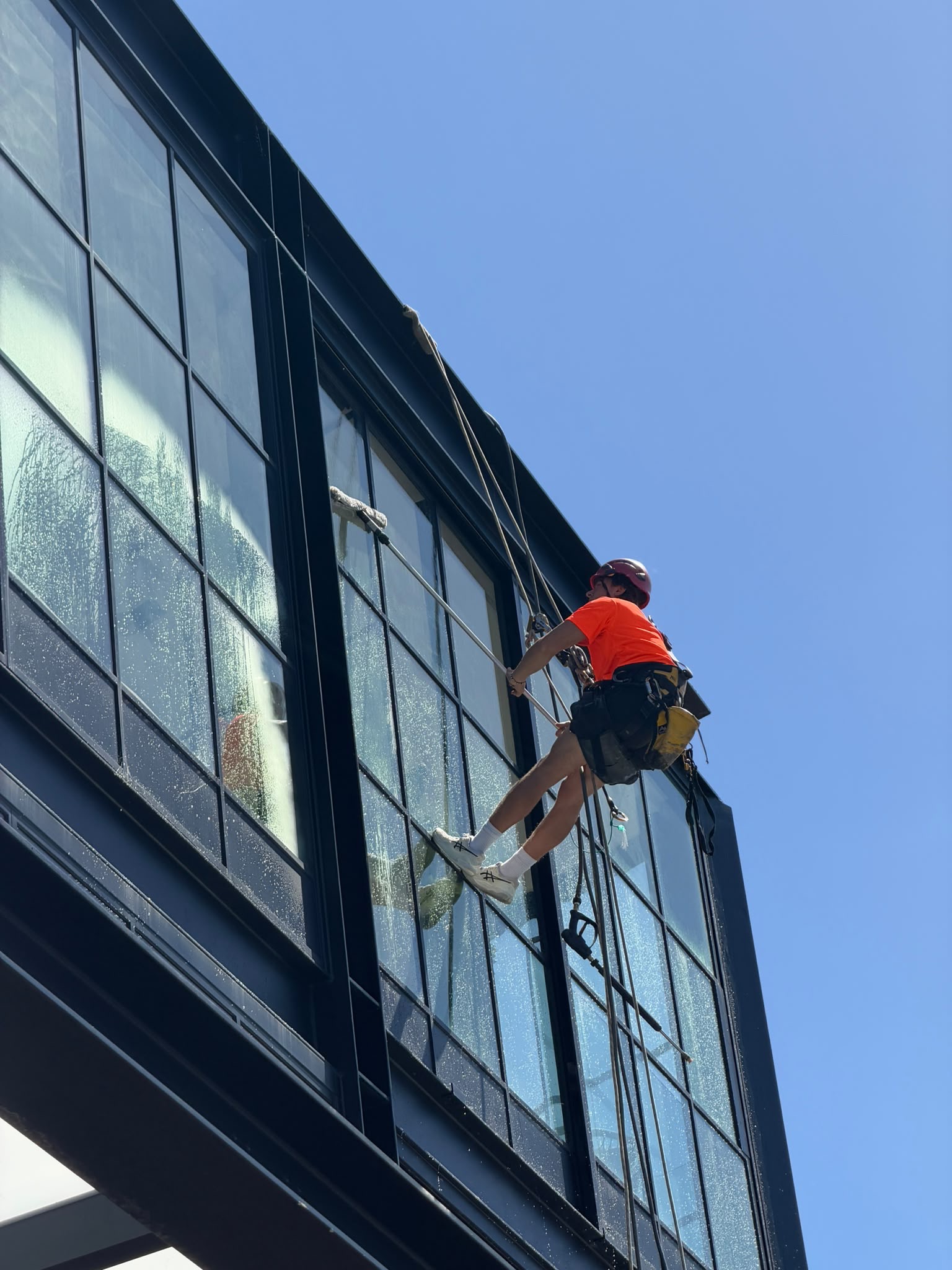
Look up at a commercial building in Auckland and you might see someone hanging on ropes with a pressure-washer gun or other equipment. From the footpath, you see the person, the building and a long way down. What you don’t see is the work that happened before they left the roof.
For property managers considering commercial rope access in Auckland, the conversation shouldn’t just be about reaching the windows or cladding. It should be about how the whole job will run: the planning, the communication and the site management.
A good rope-access job is more than a clean building
The windows can be spotless and the building freshly washed, but that alone doesn’t tell you whether the job was managed well. Did tenants know what was happening? Were entrances kept usable? Were people below protected? Did the crew coordinate around deliveries, respond to changing weather and keep the building manager informed?
You’re not just paying for clean glass or cladding. You’re paying for a contractor who plans the work, manages the risks and keeps disruption under control. The wash is the result you can see. The planning, communication and site management are what make it a job done properly.
Good communication starts before the crew arrives
A commercial building is someone else’s workplace. Tenants have customers, deliveries have time slots, and the building manager has more to deal with than your wash crew.
Before work starts, the contractor needs to establish who’s in charge, who needs updates and what approvals are required. That includes site inductions, any required permits, signing-in procedures and making sure everyone understands the building’s rules—not just assuming the whole crew knows because one person has worked there before.
Where can the van park without blocking a loading bay or emergency access? Which toilets are contractors allowed to use? Where can equipment be stored? Which entrances need to stay open, and who needs to know if access changes?
The building manager shouldn’t have to chase the crew to find out where they’re working or why an entrance is closed. Agree the day’s work, let the right people know before moving exclusion zones, and speak up when weather or access changes. If something goes wrong, report it promptly and agree on the next step.
Finishing properly matters too: account for the crew, follow signing-out procedures, close out permits where required and hand the area back clearly. A clean facade doesn’t make up for a building manager being left wondering whether the crew is still on the roof.
Planning starts on the ground, not just the roof
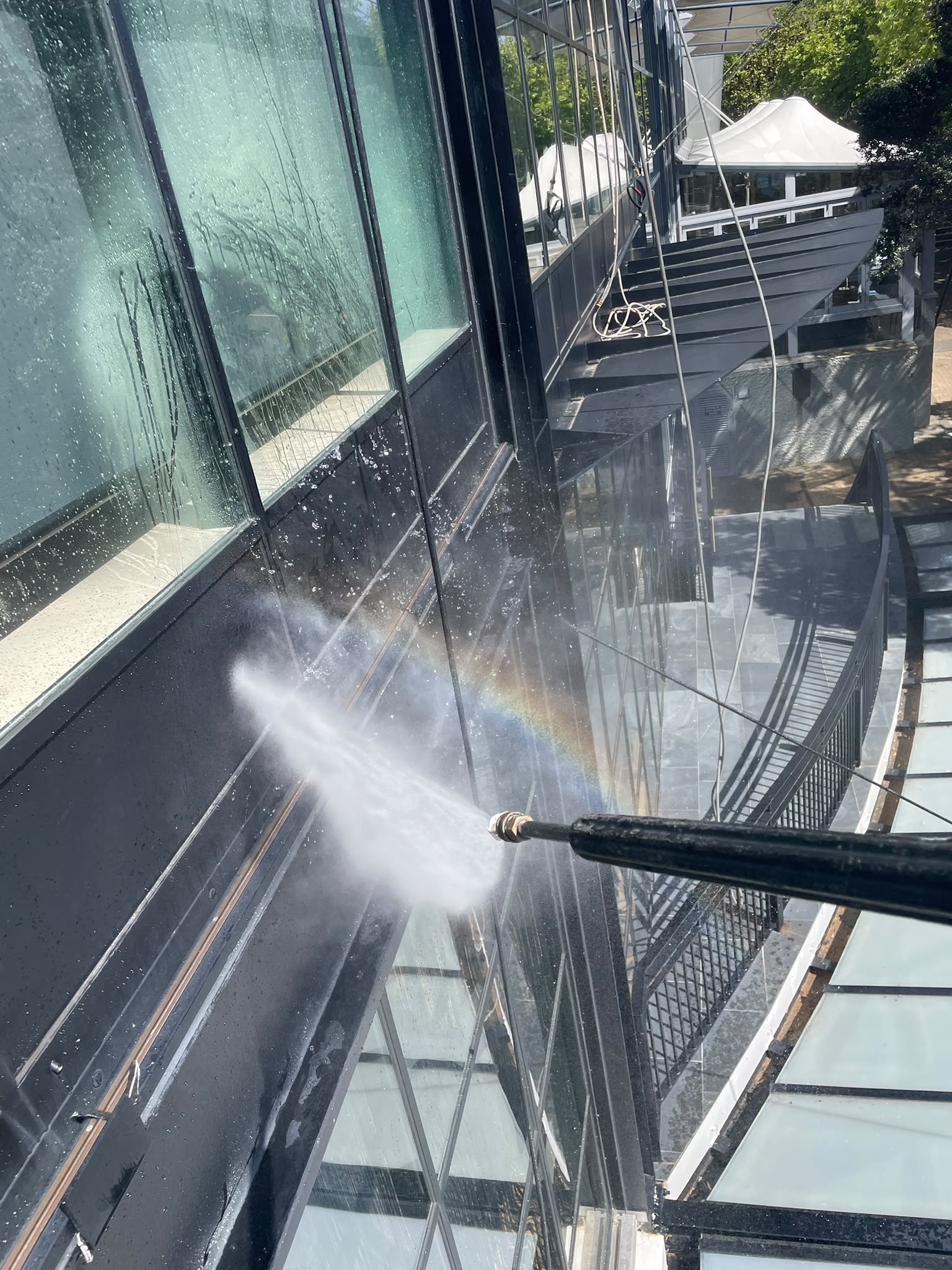
On a weekday morning, people are arriving at the building. They shouldn’t have to guess where it’s safe to walk. Planning includes the ground as well as the roof: access routes, exclusion zones and communication with the building’s contact.
Up above, the anchoring arrangements, equipment, rope protection and the working and backup systems all need checking. The job’s safe work method statement and pre-start discussion need to match the conditions actually in front of the crew.
Before anyone starts work on ropes, there also needs to be a workable rescue plan. “Call 111” is not the whole answer. The crew still needs to plan how an emergency would be handled, with suitable people and equipment available. Auckland weather can change before morning tea, and stopping or changing the plan isn’t a failure to get on with it.
What should a commercial property manager ask?
Not how dramatic the drop will look. Ask your contractor to explain the access method, how people below will be protected, what happens in an emergency, when work would stop, and how the crew will fit into the building’s own procedures—inductions, permits, parking, sign-in and sign-out.
The best part of a well-managed rope-access job might be how uneventful it looks. The crew does the work, people use the building, and everyone goes home. The person on the ropes is only the bit you can see.
Planning commercial window cleaning or a building wash in Auckland? Talk to Clean Start Property Services.
Pernell Turner, Clean Start Property Services